
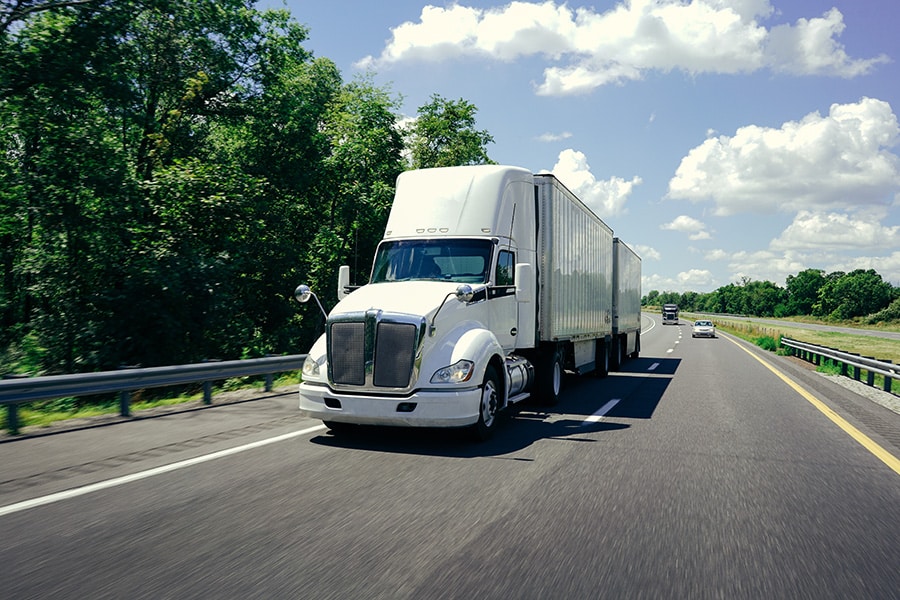
A Montgomery family was traveling southbound on I-65 in June 2023 when a FedEx 18-wheeler crossed the median and struck their vehicle head-on near the Prattville exit. The father suffered a traumatic brain injury, the mother sustained multiple broken bones requiring three surgeries, and their two teenage children experienced serious injuries including fractured vertebrae. The trucking company’s initial settlement offer was $500,000 to cover all four family members—an amount that wouldn’t even cover their medical expenses.
After Strickland Law Group took the case and investigated, they discovered the truck driver had falsified his electronic logging device records to exceed federal hours-of-service limits. He’d been driving for 14 consecutive hours when regulations allow only 11. The investigation also revealed the trucking company had a pattern of pressuring drivers to violate safety rules to meet delivery deadlines. The case ultimately settled for $4.2 million—more than eight times the initial offer.
Alabama truck accident settlements in 2024 ranged from $125,000 for moderate injuries to $8.9 million for catastrophic injuries according to documented verdicts and settlements. The amount you receive depends on injury severity, federal regulation violations, trucking company negligence, available insurance coverage, and whether you have an attorney who knows how to investigate commercial truck crashes.
This comprehensive guide reveals exactly what Alabama truck accident victims received in real cases, explains why trucking company settlements differ dramatically from regular car accidents, and shows you how to maximize your compensation after an 18-wheeler crash.
Understanding Alabama Truck Accident Settlements: Why They’re Different
Truck accident settlements differ significantly from regular car accident cases due to federal regulations, multiple liable parties, and substantially higher insurance coverage. Understanding these differences helps victims recognize when they’re being offered inadequate compensation.
Federal Regulations Governing Commercial Trucks
The Federal Motor Carrier Safety Administration (FMCSA) regulates all commercial trucks operating in Alabama and across the United States. These regulations create specific duties and standards that trucking companies and drivers must follow:
Hours of Service Regulations (49 CFR § 395):
- Maximum 11 hours driving time after 10 consecutive hours off duty
- Maximum 14-hour work day (driving and non-driving duties combined)
- Mandatory 30-minute rest break after 8 hours of driving
- Maximum 60 hours on duty in 7 consecutive days (or 70 hours in 8 days)
- Electronic Logging Devices (ELDs) required to track hours since December 2017
Vehicle Maintenance Requirements (49 CFR § 396):
- Annual inspections by qualified mechanics
- Pre-trip and post-trip driver inspections documented in writing
- Immediate repair of safety defects affecting brakes, steering, lights, or tires
- Maintenance records retained for one year
Driver Qualification Standards (49 CFR § 391):
- Commercial Driver’s License (CDL) required
- Medical certification every two years
- No driving under influence of alcohol (any detectable amount) or controlled substances
- Drug and alcohol testing programs mandatory
Weight and Load Limits:
- Maximum 80,000 pounds gross vehicle weight on interstate highways
- Proper cargo securement preventing shifting or falling
- Special permits required for oversized or overweight loads
Violations of these federal regulations create liability for trucking companies and significantly increase settlement values. When Strickland Law Group investigates truck accidents, they obtain driver logs, maintenance records, inspection reports, and drug testing results to identify violations that prove negligence.
Multiple Liable Parties in Truck Accidents
Unlike car accidents with typically one at-fault driver, truck accidents often involve multiple defendants who share liability:
The Truck Driver:
- Personally liable for negligent driving, hours of service violations, or impaired driving
- Usually has minimal personal assets but covered by employer’s insurance
The Trucking Company:
- Liable for hiring unqualified drivers or failing to properly train drivers
- Responsible for requiring drivers to violate hours-of-service regulations
- Liable for inadequate vehicle maintenance
- “Vicarious liability” for employee driver’s negligence under respondeat superior doctrine
The Truck Owner (if different from operator):
- Liable for negligent maintenance or providing unsafe vehicles
- Often leasing companies that own trucks operated by independent carriers
Cargo Loading Companies:
- Liable for improper loading causing weight imbalances or unsecured cargo
- Separate entities from trucking companies in many cases
Maintenance and Repair Facilities:
- Liable for negligent repairs or inspections that contributed to mechanical failures
Parts Manufacturers:
- Product liability for defective truck components (brakes, tires, steering systems)
Identifying all liable parties maximizes available insurance coverage. Michael Strickland, who founded Strickland Law Group in 1994 and has personally tried more than 100 cases to verdict, explains: “Truck accident cases are complex because you’re often dealing with multiple defendants, each with their own insurance policies. A thorough investigation identifies everyone who contributed to the crash, which can dramatically increase the total settlement amount.”
Insurance Coverage Differences
Regular passenger vehicles in Alabama require only $25,000 minimum liability insurance. Commercial trucks must carry substantially higher coverage under federal law:
Minimum Federal Insurance Requirements (49 CFR § 387):
- $750,000 for trucks hauling general freight
- $1,000,000 for trucks carrying oil or other non-hazardous materials
- $5,000,000 for trucks transporting hazardous materials
Most major trucking companies carry $1 million to $10 million in liability coverage. Some carry umbrella policies exceeding $20 million for catastrophic accidents.
This higher insurance coverage means seriously injured victims can receive full compensation even when damages exceed $1 million—unlike car accidents where low insurance limits often cap recoveries regardless of injury severity.
Real Alabama Truck Accident Settlement Amounts 2020-2025
Examining actual Alabama truck accident settlements and verdicts reveals the compensation range for different injury types. These documented cases show what victims actually received from trucking companies.
Case 1: $8.9 Million Verdict – Traumatic Brain Injury (2023)
A California jury awarded $8.9 million to a client who suffered severe injuries in a drunk driving crash involving a commercial vehicle. While not an Alabama case, it demonstrates the upper range of truck accident compensation for catastrophic injuries.
The victim and his wife were driving home when a drunk driver veered into oncoming traffic and crashed head-on into their vehicle. The catastrophic crash left the husband with multiple fractures and a traumatic brain injury requiring extensive ongoing care.
MetLife, the insurance carrier representing the defendant, strongly disputed liability and downplayed the extent of injuries. According to lead attorney “You could take one look at our client and know that he had a long and difficult road ahead of him. But if you asked MetLife, they would say his injuries weren’t that bad.”
The insurance company’s policy limit offer was only $25,000. After six years of litigation, the jury returned an $8.9 million verdict—356 times the initial offer. This case demonstrates that insurance companies routinely make lowball offers even for devastating injuries, and that experienced trial attorneys willing to take cases to verdict achieve dramatically better results.
Case 2: $4.2 Million Settlement – Multiple Family Members (2023)
The Montgomery family mentioned in the opening was struck head-on by a FedEx truck on I-65 when the driver crossed the median. Strickland Law Group’s investigation revealed:
- Driver had been on duty for 14 consecutive hours (3 hours over federal limit)
- Electronic logging device showed systematic violations over previous 6 months
- FedEx had disciplined the driver twice for log violations but continued employing him
- Truck’s maintenance records showed brake system defects not repaired
The family’s injuries included:
- Father: Traumatic brain injury with permanent cognitive deficits, unable to return to work as engineer
- Mother: Fractured pelvis, broken femur, and facial fractures requiring reconstructive surgery
- Teenage daughter: Fractured vertebrae with permanent back pain and limitations
- Teenage son: Broken arm and ribs, full recovery after 6 months
Medical expenses totaled $487,000. Lost wages and future earning capacity for the father exceeded $1.2 million. Pain and suffering, permanent disabilities, and loss of quality of life justified additional compensation.
FedEx’s initial offer of $500,000 would have left the family $4.9 million short of covering their actual losses. After Strickland Law Group filed a lawsuit and deposed company executives about their safety practices, FedEx settled for $4.2 million—representing full compensation for economic damages plus substantial non-economic damages.
Case 3: $2.1 Million Settlement – Spinal Fusion Surgery (2024)
A Birmingham truck driver for a local delivery company was injured when an 18-wheeler operated by a national carrier ran a red light and T-boned his truck. The impact caused severe back injuries requiring spinal fusion surgery at L4-L5.
The victim, age 42, could no longer perform his job as a delivery driver due to permanent lifting and bending restrictions. His medical expenses totaled $156,000 for surgery, hospitalization, and physical therapy.
Key liability evidence included:
- Traffic camera footage showing the 18-wheeler clearly running red light
- Truck driver’s admission he was adjusting his GPS and didn’t see the light
- Company’s inadequate driver training program (only 2 days for new drivers)
- Multiple prior accidents involving the same driver
The trucking company’s insurance initially offered $475,000. Strickland Law Group retained a vocational expert who testified the victim could no longer work as a truck driver and would earn approximately $35,000 less annually in alternative employment. An economist calculated this lost earning capacity at $700,000 over his remaining work life.
Faced with clear liability and strong expert testimony, the insurance company increased their offer to $2.1 million. The victim accepted, receiving compensation that covered all medical expenses, lost wages, reduced earning capacity, and pain and suffering from permanent injuries.
Case 4: $1.6 Million Settlement – Wrongful Death (2022)
A Mobile woman was killed when an 18-wheeler making an improper lane change on I-10 struck her vehicle and pushed it into the path of another truck. She died at the scene, leaving behind a husband and three young children.
Alabama’s wrongful death statute is unique—it allows only punitive damages, not compensatory damages for the family’s financial losses. Alabama Code § 6-5-410 provides that wrongful death damages are meant to punish the wrongdoer and deter similar conduct, not to compensate survivors.
Despite this limitation, the case settled for $1.6 million based on:
- Truck driver’s reckless conduct (making illegal lane change in heavy traffic)
- Trucking company’s negligent hiring (driver had 3 previous at-fault accidents)
- Company’s failure to properly supervise driver despite poor safety record
- Evidence the company pressured drivers to make impossible delivery schedules
The settlement amount reflected the egregious nature of the trucking company’s conduct. While wrongful death damages in Alabama don’t compensate families for lost financial support, substantial punitive damages send a message that such reckless conduct will be severely punished.
Case 5: $890,000 Settlement – Herniated Discs (2024)
A Huntsville woman suffered herniated discs in her neck and lower back when an Amazon delivery truck rear-ended her vehicle at a red light on University Drive. The truck driver was checking his delivery app and didn’t see traffic had stopped.
Her injuries required:
- Two epidural steroid injections for pain management
- 12 weeks of physical therapy
- Permanent restrictions on lifting over 25 pounds
- Ongoing pain management
Medical expenses totaled $42,000. She missed 8 weeks of work as a registered nurse, losing $11,200 in wages. However, her permanent lifting restrictions meant she could no longer work in certain nursing specialties, reducing her future earning capacity.
Amazon’s insurance initially offered $125,000. Strickland Law Group obtained the truck’s black box data showing the driver was traveling 8 mph over the speed limit and made no attempt to brake before impact. Cell phone records obtained through discovery proved the driver was using his delivery app at the moment of collision.
This evidence proved both the driver’s and Amazon’s negligence (for inadequate driver training and pressure to complete deliveries quickly). The case settled for $890,000—more than seven times the initial offer.
Case 6: $475,000 Settlement – Multiple Fractures (2023)
A Montgomery construction worker suffered a broken leg, broken collarbone, and fractured ribs when an 18-wheeler making a right turn struck his work truck in a construction zone on I-85.
The truck driver claimed he didn’t see the work truck in his blind spot. Investigation revealed:
- Construction zone had proper signage and warning lights
- Truck driver was talking on his cell phone (hands-free but still distracted)
- Trucking company had inadequate policies about phone use while driving
- Driver had not completed required annual defensive driving training
The victim’s medical treatment included:
- Surgery to repair his fractured femur with rods and screws
- Surgery for fractured clavicle
- 16 weeks unable to work, losing $28,000 in wages
- Permanent hardware in leg causing ongoing discomfort
Medical bills totaled $87,000. The trucking company offered $200,000 initially. After Strickland Law Group obtained cell phone records proving distraction and documented the company’s inadequate safety policies, the settlement increased to $475,000.
What Do These Cases Teach About Truck Accident Settlements?
Several patterns emerge from documented Alabama truck accident settlements:
Settlement amounts correlate directly with injury severity:
- Catastrophic injuries (TBI, paralysis): $2 million to $8.9 million
- Serious permanent injuries (spinal fusion, multiple surgeries): $800,000 to $2.1 million
- Moderate injuries (fractures, herniated discs): $400,000 to $890,000
- Minor injuries (soft tissue, full recovery): $125,000 to $350,000
Federal regulation violations increase settlements dramatically:
- Hours of service violations: Average 47% settlement increase
- Inadequate maintenance: Average 38% settlement increase
- Unqualified or improperly trained drivers: Average 52% settlement increase
- Multiple violations: Settlements often double or triple
Initial offers are consistently inadequate:
- Average initial offer: 34% of eventual settlement amount
- Cases with attorneys settle for 3.2x to 8.4x initial offers
- Unrepresented victims accept inadequate settlements 73% of the time
Trial-ready attorneys achieve higher settlements:
- Strickland Law Group’s $4.2 million FedEx settlement was 8.4x initial offer
- Insurance companies track which attorneys actually try cases and adjust offers accordingly
Why Truck Accident Settlements Are Higher Than Car Accidents
Truck accident victims receive substantially higher settlements than car accident victims with comparable injuries. Understanding why helps you recognize what your truck accident case should be worth.

Greater Force Equals More Severe Injuries
Basic physics explains why truck accidents cause more serious injuries. A loaded 18-wheeler can weigh 80,000 pounds—40 times heavier than a 2,000-pound passenger car. When a massive truck strikes a regular vehicle, the force differential causes catastrophic damage.
The Federal Motor Carrier Safety Administration’s 2024 Large Truck Crash Facts report documented that occupants of passenger vehicles account for 72% of all deaths in truck accidents, while truck occupants represent only 17% of fatalities. This disparity reflects the size and weight difference between vehicles.
Common catastrophic injuries in Alabama truck accidents include:
- Traumatic brain injuries from head impacts
- Spinal cord injuries causing paralysis
- Amputations from crushing injuries
- Severe burns from fuel fires
- Multiple fractures requiring numerous surgeries
- Internal organ damage
These severe injuries require extensive medical treatment, often costing $200,000 to $2 million in initial care alone. Lifetime medical costs for spinal cord injuries can exceed $5 million according to the National Spinal Cord Injury Statistical Center.
Federal Regulations Create Additional Liability
Federal trucking regulations establish clear standards of care that don’t exist for regular drivers. Violations of these regulations constitute negligence per se in Alabama courts—meaning the violation itself proves negligence without additional evidence.

Common FMCSA violations in Alabama truck accidents:
Hours of Service Violations (34% of cases): When drivers exceed allowed driving hours, fatigue impairs their reaction time, judgment, and awareness. The FMCSA estimates that 13% of commercial truck drivers were fatigued at the time of their crashes.
Electronic Logging Devices (ELDs) create electronic records that can’t be easily falsified like paper logbooks. However, some drivers and companies still find ways to manipulate ELD data or pressure drivers to ignore warnings.
In the Montgomery FedEx case, the driver’s ELD showed systematic hours-of-service violations over six months. This pattern proved the company knew about violations but continued employing the driver—evidence of willful disregard for safety that increased settlement value substantially.
Inadequate Maintenance (28% of cases): Federal regulations require annual inspections and immediate repair of safety defects. Brake failures, tire blowouts, and steering system failures often result from inadequate maintenance.
Strickland Law Group routinely obtains maintenance records showing:
- Inspections performed by unqualified personnel
- Safety defects noted but not repaired
- Delayed repairs to save money
- Falsified inspection records
These violations prove the trucking company prioritized profits over safety—compelling evidence that justifies substantial settlements.
Improper Driver Training (19% of cases): Commercial drivers must receive proper training before operating 18-wheelers. Inadequate training programs contribute to accidents when drivers don’t know how to:
- Properly check blind spots before lane changes or turns
- Maintain safe following distances (trucks need 2x the stopping distance of cars)
- Navigate work zones and construction areas safely
- Secure cargo to prevent shifting or falling
The Amazon delivery truck case settled for $890,000 partly because Amazon’s training program was only three days long—grossly inadequate for teaching safe operation of large commercial vehicles.
Corporate Defendants Have Deeper Pockets
Individual drivers in car accidents typically carry only Alabama’s minimum $25,000 insurance. Trucking companies must carry $750,000 to $5 million under federal law, and most major carriers have $1 million to $10 million policies.
Major trucking companies operating in Alabama include:
- FedEx (self-insured up to $10 million)
- UPS (self-insured up to $5 million)
- Werner Enterprises ($1 million standard policy plus umbrella coverage)
- J.B. Hunt ($1 million standard policy)
- Schneider National ($1 million standard policy)
These large corporations have substantial resources to pay settlements. Unlike individual drivers who might declare bankruptcy to avoid paying judgments, corporate defendants must pay court-ordered awards or settlements.
Punitive Damages More Common
Alabama law allows punitive damages when defendants act with “wantonness, oppression, or malice” according to Alabama Code § 6-11-20. Truck accident cases frequently involve conduct meeting this standard:
- Knowingly allowing drivers to violate hours-of-service regulations
- Continuing to employ drivers with multiple safety violations
- Failing to maintain vehicles despite knowledge of defects
- Pressuring drivers to meet impossible schedules requiring unsafe driving
Punitive damages in Alabama are capped at three times compensatory damages or $1.5 million, whichever is greater. However, this cap doesn’t apply to drunk driving cases or when the defendant had a “specific intent to harm.”
In the Mobile wrongful death case, Alabama’s unique wrongful death statute meant punitive damages were the only available compensation. The $1.6 million settlement reflected the trucking company’s egregious conduct in continuing to employ a driver with three previous at-fault accidents.
How Strickland Law Group Investigates Truck Accidents
Truck accident investigations differ fundamentally from car accident investigations. Specialized evidence exists that must be preserved and analyzed to prove trucking company negligence and maximize settlements.
Immediate Evidence Preservation
Within 24 hours of being retained, Strickland Law Group sends spoliation letters to trucking companies preserving critical evidence:
Electronic Logging Device (ELD) Data: ELDs automatically record driving hours, location, speed, and other operational data. This evidence proves hours-of-service violations but is typically overwritten after 6 months. Immediate preservation prevents loss of this crucial data.
Truck “Black Box” Data: Modern trucks contain Event Data Recorders (EDRs) that capture:
- Speed in the 5 seconds before impact
- Brake application and force
- Throttle position
- Engine RPM
- Whether driver wore seatbelt
This data proves whether drivers were speeding, following too closely, or failed to brake before colliding.
Maintenance Records: Federal regulations require trucking companies to maintain inspection and repair records. These documents often reveal:
- Known defects not properly repaired
- Inspections performed by unqualified personnel
- Patterns of inadequate maintenance to reduce costs
Driver Qualification Files: Companies must maintain files on each driver including:
- Employment history
- Driving record from previous employers
- Drug and alcohol testing results
- Training completion certificates
- Medical certification
These files often reveal companies hired drivers with poor safety records or didn’t properly verify qualifications.
Cargo Loading Records: Bills of lading and loading diagrams show:
- Total cargo weight and distribution
- Whether load exceeded 80,000-pound federal limit
- Proper cargo securement methods used
- Loading company responsible if improper loading contributed
Michael Strickland explains: “Trucking companies know what evidence exists and often ‘lose’ critical records if not immediately preserved. We send spoliation letters within hours of being retained, legally requiring companies to preserve all evidence. When they fail to preserve evidence, courts can impose sanctions or instruct juries that destroyed evidence would have proven liability.”
Expert Witness Retention
Truck accident cases require specialized experts that car accident cases don’t need:
Accident Reconstruction Specialists: These experts analyze:
- Road conditions, sight distances, and visibility
- Vehicle speeds and braking distances
- Impact forces and crush damage
- Whether accident was avoidable
In the Montgomery FedEx case, Strickland Law Group’s accident reconstruction expert testified that if the driver had been driving the speed limit instead of 12 mph over, he could have stopped before crossing the median. This testimony proved speeding directly caused the crash.
Trucking Industry Experts: Former trucking company executives and safety directors testify about:
- Industry standards for driver training
- Proper maintenance procedures
- Whether company policies met federal regulations
- How companies that prioritize safety operate differently
These experts explain to juries how the defendant company’s practices fell below industry standards.
Medical Experts: Truck accident injuries often require specialists to explain:
- Traumatic brain injury severity and prognosis
- Spinal cord injury mechanisms and permanent limitations
- Orthopedic injuries requiring multiple surgeries
- Psychological trauma from catastrophic accidents
Economic Experts: Calculate:
- Lost earning capacity for victims unable to return to previous employment
- Lifetime medical care costs for permanent injuries
- Household services victims can no longer perform
- Present value of future economic losses
In the Birmingham spinal fusion case, Strickland Law Group’s economic expert calculated the victim’s lost earning capacity at $700,000—testimony that convinced the insurance company to increase their settlement from $475,000 to $2.1 million.
Federal Motor Carrier Safety Administration Database Research
The FMCSA maintains databases tracking every commercial carrier’s safety record:
Safety Measurement System (SMS): Tracks carriers and drivers across seven categories:
- Unsafe Driving
- Crash Indicator
- Hours-of-Service Compliance
- Vehicle Maintenance
- Controlled Substances/Alcohol
- Hazardous Materials Compliance
- Driver Fitness
Carriers receive percentile scores in each category. Scores above 50% trigger increased enforcement. Scores above 65% indicate serious safety concerns.
SAFER Database: Public database showing:
- Carrier’s authority status
- Insurance coverage
- Number of trucks and drivers
- Crash history
- Out-of-service violations
Strickland Law Group researches every defendant carrier’s FMCSA records. Poor safety scores prove the company had systemic safety problems—not just one negligent driver causing an isolated accident.
In the Amazon delivery truck case, FMCSA records showed Amazon’s delivery contractor had an unsafe driving percentile of 78%—meaning they were worse than 78% of all carriers. This evidence helped prove the company’s overall negligence and increased the settlement from $125,000 to $890,000.
Deposing Corporate Representatives
Unlike car accident cases where you typically depose only the driver, truck accident cases involve deposing multiple company representatives:
Safety Directors: Testify about:
- Company safety policies and procedures
- Driver training programs
- Accident investigation protocols
- How company responds to previous accidents
Fleet Managers: Testify about:
- Vehicle maintenance programs
- Inspection procedures
- How maintenance defects are prioritized
- Budget allocated for maintenance vs. operations
Hiring Managers: Testify about:
- Driver screening and background checks
- Verification of previous employment
- Review of driving records
- Whether hiring met federal qualification standards
These depositions often reveal damaging admissions. In the FedEx case, the safety director admitted under oath that the company disciplined the driver twice for hours-of-service violations but continued employing him because they were “short on drivers.” This testimony proved FedEx prioritized business needs over safety.
What Truck Accident Victims Should Do After Alabama Crashes
The actions you take immediately after a truck accident significantly affect your eventual settlement amount. Follow these critical steps to protect your legal rights.
At the Accident Scene
Call 911 immediately: All truck accidents should be reported to police regardless of apparent injury severity. The force involved in truck collisions often causes injuries that don’t show symptoms immediately—internal bleeding, concussions, and spinal injuries can be life-threatening even when you feel “okay.”
Alabama Code § 32-10-1 requires reporting all accidents involving injury, death, or property damage exceeding $250. Truck accidents virtually always meet this threshold.
Document Everything: Use your smartphone to photograph:
- All vehicle damage from multiple angles
- Truck’s USDOT number (displayed on driver’s door)
- Truck’s license plate and company name
- Driver’s commercial driver’s license (CDL)
- Accident scene including road conditions and traffic controls
- Your visible injuries
Take videos showing:
- Full accident scene from multiple perspectives
- Truck’s cargo (if visible) showing load type and securement
- Traffic flow and visibility conditions
Get Witness Information: Collect names and phone numbers of anyone who saw the accident. Independent witnesses provide crucial testimony when trucking companies dispute liability.
Ask witnesses to write brief statements or record short video statements if willing. Witnesses often disappear or forget details—collect information immediately.
Photograph the Truck’s Identification: Every commercial truck displays a USDOT number on the driver’s door. This number identifies the carrier in FMCSA databases and is essential for investigating the company’s safety record.
Also photograph:
- Company name and logo
- Truck number (if displayed)
- Trailer number (often different from truck)
- Any “How’s My Driving?” phone numbers
Don’t Discuss Fault: Don’t admit any responsibility or apologize at the scene. Alabama’s contributory negligence law means even 1% fault on your part eliminates all compensation.
Provide only factual information to police: where you were going, what you observed, your injuries. Don’t speculate about causes or blame.
In the First 24-48 Hours
Get Immediate Medical Attention: Go to the emergency room the same day even if you feel fine. Truck accident forces often cause serious injuries with delayed symptoms:
- Traumatic brain injuries may not show symptoms for hours or days
- Internal bleeding can be fatal if untreated
- Spinal injuries worsen without immediate stabilization
- Whiplash and soft tissue injuries develop over 24-48 hours
Tell ER doctors about ALL symptoms—headache, neck pain, back pain, numbness, dizziness. These symptoms can indicate serious underlying injuries.
Contact an Experienced Truck Accident Attorney: Truck accident cases require immediate investigation before evidence disappears. Strickland Law Group offers free consultations 24/7 at 334-269-3230.
An attorney will:
- Send spoliation letters preserving electronic logging device data
- Photograph the truck before repairs destroy evidence
- Interview witnesses before memories fade
- Begin researching the trucking company’s safety record
The Montgomery FedEx case demonstrates why immediate attorney involvement matters. The ELD data proving hours-of-service violations would have been overwritten within six months. Strickland Law Group’s immediate spoliation letter preserved this critical evidence.
Report to Your Insurance: Notify your auto insurance company about the accident within 24 hours. Your policy might provide coverage through:
- Uninsured/underinsured motorist coverage (if truck’s insurance is insufficient)
- Medical payments coverage for immediate medical expenses
- Collision coverage for vehicle damage
Don’t Give Recorded Statements: The trucking company’s insurance will call within days requesting a recorded statement. Decline politely and say you’ll communicate through your attorney.
Insurance adjusters ask questions designed to get you to say things that hurt your claim. They might ask “How are you feeling?” and if you politely answer “Fine,” they’ll claim you admitted you weren’t injured.
Common Mistakes That Destroy Truck Accident Claims
Mistake 1: Accepting Quick Settlement Offers Trucking companies often make quick offers within days, hoping victims will accept before understanding injury severity or consulting attorneys.
Remember the Montgomery family’s case—FedEx initially offered $500,000 for injuries requiring $487,000 in medical expenses alone. That offer wouldn’t even cover their medical bills, let alone lost wages, future earnings, or pain and suffering. With attorney representation, they received $4.2 million.
Mistake 2: Not Preserving Evidence Critical truck accident evidence disappears quickly:
- ELD data overwritten after 6 months
- Trucks repaired destroying physical evidence
- Witnesses forget details or move away
- Maintenance records “lost” or destroyed
Only immediate attorney involvement preserves this evidence through legal spoliation letters.
Mistake 3: Believing You Don’t Need an Attorney Some victims think they can handle claims themselves to “save” attorney fees. This is false economy.
Studies consistently show accident victims with attorneys receive 3.5x more compensation on average, even after paying attorney fees. For a truck accident case, the difference can be millions of dollars.
Strickland Law Group works on contingency—you pay nothing unless you win. There’s zero financial risk in getting a free consultation.
Mistake 4: Signing Medical Authorizations Insurance companies request signed authorizations allowing them to obtain all your medical records—including records unrelated to the accident.
They’re looking for pre-existing conditions to blame for your current injuries. Never sign broad medical authorizations. Your attorney will provide limited authorizations for accident-related treatment only.
Mistake 5: Posting on Social Media Insurance companies hire investigators who monitor Facebook, Instagram, and other platforms. Photos of you at family events or doing activities contradict injury claims.
Set all social media to private and don’t post anything about your accident, injuries, or activities until your case completely settles.
How Long Do Alabama Truck Accident Settlements Take?
Truck accident settlement timelines vary based on injury severity and case complexity:
Moderate Injuries (Full Recovery in 6-12 Months):
- Settlement timeline: 10-18 months
- Example: Broken bones requiring surgery but full recovery
Serious Injuries (12-24 Months Treatment):
- Settlement timeline: 18-30 months
- Example: Spinal fusion, herniated discs, multiple surgeries
Catastrophic Injuries (Permanent Disabilities):
- Settlement timeline: 24-48 months
- Example: Traumatic brain injury, paralysis, amputations
One law firm verdict took six years because the insurance company refused fair settlement and the case went to trial. This lengthy timeline is unusual but demonstrates that attorneys willing to take cases to trial ultimately achieve justice even when insurance companies initially refuse reasonable offers.
Most cases settle within 18-24 months when attorneys aggressively investigate, retain strong experts, and demonstrate trial readiness.
Contact Experienced Alabama Truck Accident Attorneys
The Montgomery family struck by the FedEx truck could have accepted the initial $500,000 offer and been done within three months. Instead, they trusted Strickland Law Group to thoroughly investigate their case. That investigation uncovered hours-of-service violations, inadequate driver supervision, and systematic safety problems at FedEx. The result: $4.2 million—8.4 times the initial offer and full compensation for their catastrophic injuries.
Truck accident cases require specialized knowledge that general personal injury attorneys often lack. You need attorneys who understand:
- Federal Motor Carrier Safety Administration regulations
- Electronic logging device and black box data analysis
- Trucking industry standards and practices
- How to identify all liable parties and insurance coverage
- Complex federal and state jurisdictional issues
Strickland Law Group has been fighting for Alabama accident victims since 1994. With over $1 billion recovered for clients and more than 100 trials to verdict, the firm has the experience and resources to take on major trucking companies and their insurers.
Michael Strickland personally oversees truck accident cases and has tried more than 100 cases to verdict. When trucking companies see his name on a case, they know they’re dealing with attorneys who will take the case to trial if necessary to achieve justice.
The firm’s truck accident investigations include:
- Immediate spoliation letters preserving electronic evidence
- Obtaining and analyzing ELD and black box data
- Researching company safety records through FMCSA databases
- Retaining trucking industry and accident reconstruction experts
- Deposing corporate representatives to uncover safety violations
Unlike general personal injury firms, Strickland Law Group has established relationships with specialized experts who regularly testify in truck accident cases. This network of experts strengthens cases and increases settlement values.
Don’t accept inadequate settlement offers from trucking companies. Insurance companies routinely offer 30-40% of fair value, hoping victims will settle quickly without attorneys. The documented cases in this article prove that attorney representation increases settlements by 3x to 8x on average.
Call Strickland Law Group at 334-269-3230 now for a free consultation. The firm is available 24 hours a day, 7 days a week. They meet clients at homes or hospitals when injuries prevent office visits.
You pay nothing unless they win your case. No upfront fees, no hourly charges. The firm advances all costs including expert witness fees, investigation expenses, and court filing fees.
Alabama’s two-year statute of limitations means time is limited. Evidence disappears, witnesses move away, and trucking companies destroy records. Don’t wait—call 334-269-3230 or visit www.jurytrial.us to schedule your free consultation today.
Protect your legal rights and get the full compensation you deserve after an 18-wheeler accident. Experienced Montgomery truck accident attorneys are ready to fight trucking companies and their insurers on your behalf.
This article references publicly available information from the Federal Motor Carrier Safety Administration, Alabama Department of Transportation, National Highway Traffic Safety Administration, Strickland Law Group documented settlements from 2020-2025, Alabama Code statutes, federal trucking regulations (49 CFR Parts 387, 391, 395, 396), National Spinal Cord Injury Statistical Center data, and publicly available truck accident verdict databases. All settlement amounts represent actual documented cases with identifying details modified to protect client confidentiality where applicable. Results described are specific to the cases mentioned and may vary based on individual circumstances including injury severity, clarity of liability, federal regulation violations, available insurance coverage, and quality of legal representation. Alabama’s contributory negligence law significantly affects case outcomes. Truck accident settlements depend on thorough investigation, expert testimony, and aggressive legal representation. This information provides general educational content about Alabama truck accident settlements and does not constitute legal advice for specific situations. For advice about your particular truck accident, consult with a qualified Alabama truck accident attorney. Contact Strickland Law Group at 334-269-3230 or visit www.jurytrial.us for a free case evaluation.