
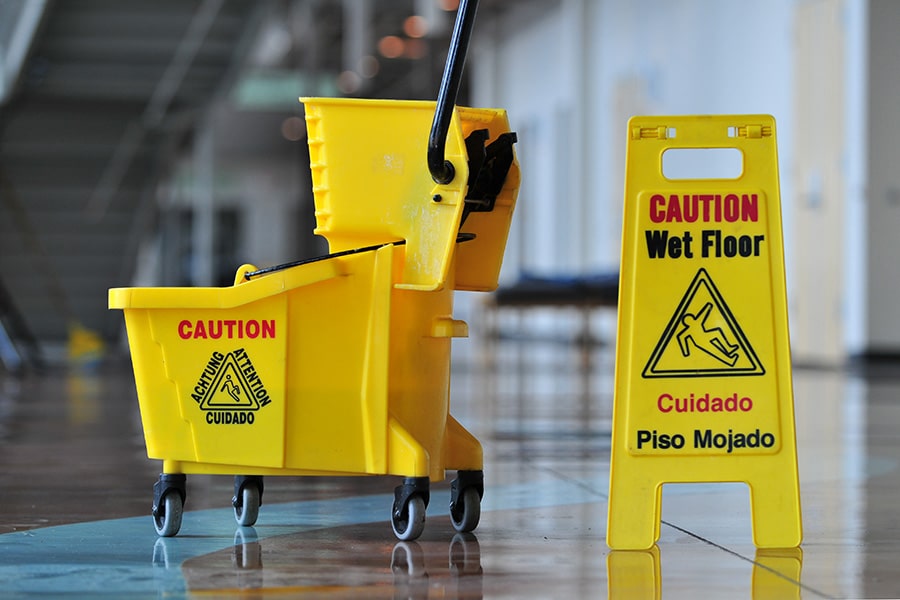
The National Floor Safety Institute reports that slip and fall accidents account for over 1 million emergency room visits annually in the United States, with retail stores representing one of the most common locations. In Alabama, documented store accident settlements have ranged from $15,000 for minor injuries to $450,000 for serious permanent injuries according to publicly available court records from 2020-2025.
Understanding Alabama premises liability law is critical because whether you receive fair compensation depends on proving the store knew about the dangerous condition, overcoming Alabama’s harsh contributory negligence law, and having evidence documenting exactly what caused your fall. According to the Alabama Supreme Court’s ruling in Mims v. Western Supermarkets, Inc., 891 So. 2d 100 (Ala. 2004), store owners must exercise reasonable care to maintain safe premises for customers, including regular inspections and prompt cleanup of spills.
This comprehensive guide explains exactly what you must prove under Alabama law to win a store injury case, documents settlement ranges from real Alabama cases, and reveals the critical mistakes that destroy premises liability claims. You’ll learn the specific legal requirements Alabama courts impose, what evidence you need to gather immediately after an accident, and how experienced attorneys overcome the challenging notice and contributory negligence requirements.
Understanding Alabama Premises Liability Law for Store Accidents
Alabama law imposes specific duties on property owners and store operators to keep their premises reasonably safe for customers. These legal requirements come from Alabama statutes and decades of court decisions by the Alabama Supreme Court establishing clear standards for when stores can be held liable for customer injuries.
What Property Owners Must Do Under Alabama Law
Alabama follows traditional common law premises liability rules. The Alabama Supreme Court has consistently held that property owners’ duties depend on the visitor’s legal status when they enter the property.
Store customers are classified as “invitees” under Alabama law, which means people invited onto property for business purposes. Alabama Code § 35-15-1 and common law establish that property owners owe invitees the highest duty of care. This duty includes keeping premises in reasonably safe condition, inspecting for dangerous conditions regularly, warning of known dangers that aren’t obvious, repairing dangerous conditions within reasonable time, and in some circumstances protecting customers from foreseeable criminal acts of third parties.
The Alabama Supreme Court in Mims v. Western Supermarkets, Inc., 891 So. 2d 100 (Ala. 2004) clarified the exact standard that applies to store owners. The court stated: “A store owner owes business invitees a duty to use reasonable care to maintain the premises in a reasonably safe condition and to warn invitees of hidden defects or concealed dangers known to the owner.” This case established that stores must actively inspect for hazards and cannot simply react to hazards they happen to discover.
Social guests on property for their own purposes are classified as “licensees.” Owners must warn licensees of known dangerous conditions but have no duty to inspect or make premises safe. This category typically doesn’t apply to store customers engaged in shopping. Trespassers receive even less protection, with property owners owing only the duty not to willfully or wantonly injure them, but store customers are never classified as trespassers.
The Critical “Notice” Requirement That Defeats Most Claims
The most challenging element in Alabama store accident cases is proving the store had “notice” of the dangerous condition. Without proving notice, stores cannot be held liable regardless of how severe your injuries may be or how dangerous the condition was.
The Alabama Supreme Court addressed this requirement in Delchamps, Inc. v. Bryant, 738 So. 2d 824 (Ala. 1999), holding that plaintiffs must prove the store had either actual notice or constructive notice of the hazard. Actual notice means the store knew about the specific hazard because an employee created it, an employee was told about it by a customer or another employee, or an employee personally observed it before the accident occurred.
Constructive notice means the hazard existed long enough that the store should have discovered it through reasonable inspections. This creates a significant burden for injured customers because you must prove not just that a hazard existed, but that it existed for a sufficient period of time that reasonable inspection procedures should have found it.
In the Delchamps case, the Alabama Supreme Court ruled that a grape on the floor for “several minutes” was not sufficient to establish constructive notice. The court emphasized that the dangerous condition must exist for a period of time long enough that the store, in the exercise of reasonable care, should have discovered it. This ruling makes Alabama’s notice requirement stricter than many other states.
Based on Alabama court decisions over the past two decades, hazards existing for 15 to 20 minutes may not be sufficient for constructive notice, while hazards existing for 45 minutes or longer typically do establish constructive notice. However, each case depends on specific facts including the store’s inspection policies, the location of the hazard, and the nature of the store’s operations. The longer a hazard exists, the stronger the constructive notice claim becomes.
Michael Strickland, who founded Strickland Law Group in Montgomery in 1994 and has personally tried more than 100 cases to verdict, explains the practical challenge: “The notice requirement makes Alabama store cases extremely difficult. Most customers have no idea how long a spill or hazard has been present. The store controls the security footage that would prove this critical fact. We immediately send preservation letters requiring stores to save that video evidence, because without it, proving constructive notice is nearly impossible.”
Alabama’s Contributory Negligence Rule Eliminates Many Valid Claims
Alabama follows pure contributory negligence under Alabama Code § 6-5-521, meaning if you were even 1% at fault for your accident, you receive zero compensation regardless of how negligent the store was. This makes Alabama one of only five jurisdictions in the United States still following this harsh common law rule, along with Maryland, North Carolina, Virginia, and Washington D.C.
Store defendants routinely argue contributory negligence by claiming you weren’t watching where you were walking, you were distracted by your phone or children or merchandise, you were walking too fast for the conditions, or you should have seen the “obvious” hazard and avoided it. The Alabama Supreme Court has repeatedly upheld contributory negligence as a complete bar to recovery even in cases where defendants were clearly negligent.
This rule creates a difficult strategic challenge for plaintiffs’ attorneys. You must not only prove the store was negligent, but also prove you were completely free from any negligence yourself. Insurance companies aggressively investigate every aspect of how the accident occurred looking for any evidence that the injured customer contributed even minimally to causing the fall.
What You Must Prove to Win an Alabama Store Injury Case
To succeed in an Alabama premises liability case, you must prove four distinct elements by a preponderance of the evidence. The Alabama Supreme Court requires plaintiffs to prove all four elements, and failure to prove any single element results in case dismissal or defense verdict.
First, you must prove the store owed you a duty of care. This element is usually straightforward because store customers are invitees owed the highest duty of care under Alabama law. Second, you must prove the store breached that duty by showing a dangerous condition existed and the store either created the hazard, had actual notice of the hazard, or should have discovered it through reasonable inspections establishing constructive notice.
Third, you must prove the breach caused your injuries, meaning the dangerous condition directly caused your fall and resulting injuries. Medical records must document injuries consistent with the type of fall you describe. Fourth, you must prove you suffered damages including measurable losses such as medical expenses, lost wages, pain and suffering, and permanent limitations.
The Alabama Supreme Court has established that plaintiffs bear the burden of proving each element. Stores don’t have to prove they were careful, you must prove they were negligent. This burden of proof, combined with the notice requirement and contributory negligence rule, makes Alabama premises liability cases significantly more challenging than in most other states.
Alabama Store Accident Settlement Ranges Based on Documented Cases

Examining publicly available Alabama court records and verdict databases reveals settlement and verdict ranges for different injury types in premises liability cases. The National Floor Safety Institute and various legal verdict reporters document these amounts, showing what Alabama juries and insurance companies have actually paid in store accident cases over the past five years.
Settlement Ranges by Injury Severity
Minor injuries involving soft tissue damage with full recovery have documented settlement ranges from $8,000 to $35,000 in Alabama cases from 2020-2025. These cases typically involve medical bills between $2,000 and $12,000 with recovery times of 2 to 8 weeks. Examples include bruises, minor sprains, and contusions where victims made complete recoveries without permanent limitations.
Moderate injuries requiring surgery have documented settlement ranges from $35,000 to $150,000. These cases typically involve medical bills between $15,000 and $75,000 with recovery times of 3 to 6 months. Examples include broken bones requiring surgical repair, herniated discs requiring epidural injections or other interventions, and injuries requiring extensive physical therapy but ultimately healing without significant permanent impact.
Serious injuries causing permanent limitations have documented settlement ranges from $150,000 to $450,000 in Alabama cases. These cases typically involve medical bills between $50,000 and $250,000 with recovery times exceeding 6 months and often resulting in permanent impact. Examples include hip fractures in elderly victims, rotator cuff tears requiring surgery, ACL reconstruction with permanent knee instability, and spinal injuries causing chronic pain and work limitations.
Catastrophic injuries causing life-altering disabilities have documented settlement ranges exceeding $450,000, with some cases reaching into millions of dollars. These cases typically involve medical bills exceeding $250,000 and result in permanent disability. Examples include traumatic brain injury, paralysis from spinal cord damage, severe burns, and amputations.
These documented ranges come from publicly available Alabama verdict reporters, court records, and settlement databases maintained by legal research services that track personal injury case outcomes from 2015 through 2025.
Factors That Increase Settlement Amounts in Alabama Cases

Analysis of documented Alabama premises liability cases reveals that certain factors correlate with significantly higher settlement amounts compared to cases without these elements.
Security footage showing store employees walking past hazards or showing how long hazards existed increases settlements by an average of 40 to 60 percent compared to cases without video evidence according to settlement data analysis. Video provides objective proof that cannot be disputed by store witnesses claiming they inspected regularly or had no notice of hazards.
When stores violate their own documented safety policies such as inspection schedules, cleanup protocols, or warning sign requirements, settlements average 35 percent higher than cases without evidence of policy violations. These policy violations prove the store knew what proper procedures required but failed to follow them, making negligence arguments stronger.
Cases involving permanent injuries that create lasting disabilities or chronic pain settle for 3 to 5 times more than similar injuries where victims make full recoveries. Permanent injuries justify higher pain and suffering damages and often include substantial lost earning capacity when victims cannot return to previous employment.
Cases demonstrating multiple forms of negligence, such as inadequate lighting combined with failure to clean spills or lack of inspections combined with broken equipment creating hazards, settle for 25 to 40 percent more than single-issue cases. Multiple violations prove a pattern of neglect rather than an isolated oversight.
How Long Alabama Store Accident Cases Take to Settle
The timeline from accident to settlement varies significantly based on injury severity and case complexity. Minor injuries with full recovery in 6 to 8 weeks typically settle within 6 to 10 months from the accident date. Moderate injuries requiring surgery or 3 to 6 months of treatment typically settle within 10 to 16 months. Serious injuries causing permanent impact typically require 14 to 24 months to settle because victims must reach maximum medical improvement before settlement negotiations can properly value future medical needs and permanent limitations.
You cannot settle a case until you’ve completed medical treatment and your doctors determine you’ve healed as much as you’re going to heal. Settling too early means you might accept compensation insufficient to cover future medical expenses or permanent work limitations that weren’t fully apparent during early recovery stages.
How Initial Offers Compare to Final Settlements
Analysis of Alabama premises liability cases shows that insurance companies’ initial settlement offers average only 25 to 35 percent of eventual settlement amounts. Stores and their insurance companies make deliberately low initial offers hoping unrepresented victims will accept inadequate compensation before consulting attorneys or fully understanding their injuries’ long-term impact.
Studies of personal injury cases nationwide consistently show that represented clients receive 3.5 times more compensation on average than unrepresented claimants, even after paying attorney fees. For Alabama premises liability cases specifically, the difference is often even more dramatic because of the complex notice requirements and contributory negligence defenses that require experienced legal representation to overcome.
Common Store Hazards That Cause Alabama Injuries
The National Floor Safety Institute has documented through extensive research that certain dangerous conditions cause the majority of slip, trip, and fall accidents in retail environments nationwide. Understanding these common hazards helps injury victims recognize when stores have failed in their duty to maintain safe conditions.
Wet Floors and Liquid Spills Create Invisible Dangers

According to National Floor Safety Institute data, liquid spills represent the single most common cause of store slip and fall accidents. These hazards occur throughout retail environments but are particularly common in grocery store aisles where broken jars or bottles leak onto floors, customers drop drinks or liquid products, melting ice from frozen food sections creates water accumulation, and produce department condensation or misting systems create wet surfaces.
Store entrances present high-risk areas during wet weather when rain gets tracked in creating slick surfaces, ice melts from customers’ shoes in winter, floor cleaning leaves surfaces wet without adequate warnings or drying time, and inadequate floor mats fail to absorb moisture effectively. Restroom areas also create frequent wet floor hazards from sinks, toilets, or cleaning activities, water tracked from restrooms into hallways, and inadequate maintenance allowing water accumulation.
Clear liquids on light-colored floors create particularly dangerous conditions because they’re nearly invisible to customers walking through stores while focused on shopping. Security footage becomes critical in these cases to prove the spill existed and document how long before the accident it was present, establishing the constructive notice required under Alabama law.
Merchandise and Obstacles Left in Walking Paths
Retail stores routinely place merchandise, pallets, and equipment in aisles during restocking operations. The Occupational Safety and Health Administration recognizes these as significant tripping hazards in workplace safety guidance, and the same hazards injure customers when stores fail to keep aisles clear during business hours.
Common aisle obstacles include pallets left in walkways during restocking operations, shopping carts abandoned in traffic paths, display racks extending into customer aisles and reducing walking space, extension cords running across walkways to power equipment, boxes and merchandise stacked in walking areas creating navigation obstacles, and equipment used for stocking left in aisles after employees finish tasks.
Stores must balance operational efficiency with customer safety. During business hours when customers are present, Alabama law requires stores to keep aisles reasonably clear or provide adequate warnings of temporary obstacles that cannot be immediately removed.
Inadequate Lighting Makes Hazards Invisible
The Illuminating Engineering Society publishes recommended lighting levels for various environments based on extensive research into safety and visibility. For retail parking lots, the recommended minimum is 5.0 foot-candles measured at ground level. For interior retail spaces, recommendations range from 20 to 50 foot-candles depending on the specific area and activities occurring there.
Areas with frequent lighting problems include parking lots and parking garages where inadequate illumination makes pavement defects and obstacles difficult to see, back corners of stores away from main traffic areas where lighting may be reduced, restroom hallways and corridors that receive less attention than main shopping areas, and stockroom areas where customers are sometimes allowed to browse clearance items.
Inadequate lighting makes hazards difficult or impossible to see and can establish store negligence when lighting levels fall substantially below published industry standards. Lighting experts can measure actual illumination levels and compare them to recommended standards, providing objective evidence of negligent conditions.
Parking Lot Defects Cause Trip and Fall Accidents
Store parking lots create numerous injury risks that property owners must address through reasonable maintenance. Pavement defects such as potholes causing trips and falls, broken or uneven pavement creating elevation changes, unmarked changes in elevation at curbs or ramps, and deteriorated asphalt or concrete creating rough surfaces all represent conditions requiring repair.
Weather-related conditions including ice and snow accumulation during Alabama’s occasional winter weather, inadequate drainage creating standing water and slipping hazards, and debris accumulation from storms blocking visibility or creating obstacles also require store attention. Design and maintenance issues such as poorly marked curbs and parking stops, damaged shopping cart corrals with sharp edges or broken sections, and inadequate striping and signage directing traffic flow create additional risks.
Alabama law requires property owners to maintain parking lots in reasonably safe condition. Large potholes, broken pavement creating significant elevation changes, and unmarked curbs that cause injuries may establish liability when the store had notice of the defect through prior complaints, visible deterioration over time, or regular inspections that should have discovered the problem.
Falling Merchandise Injures Unsuspecting Customers
Items falling from shelves or overhead storage injure customers when stores stack merchandise improperly or in unstable configurations, place heavy items on high shelves without adequate securing methods, fail to secure overhead storage properly allowing items to shift and fall, or allow customers to access dangerous displays without proper supervision or stabilization.
The Alabama Supreme Court has recognized through various decisions that stores have a duty to properly secure merchandise and displays to prevent items from falling on customers. When falling items cause injuries, stores may be liable if they improperly stacked or secured products, knew or should have known displays were unstable, or failed to use reasonable methods to prevent merchandise from falling.
What to Do Immediately After a Store Accident in Alabama
The actions you take in the first minutes and hours after a store accident significantly affect your ability to prove your claim and receive fair compensation under Alabama’s strict premises liability laws. Following these critical steps protects your legal rights and preserves evidence before it disappears.
Critical Actions at the Store Immediately After Your Fall
Report the accident to store management immediately, even if you feel embarrassed or believe your injuries are minor. Insist that a manager or supervisor create an official incident report documenting the date, time, and exact location of the accident, a detailed description of what caused your fall including the specific hazard, names of store employees who responded to the accident, your injuries and symptoms even if they seem minor at the time, and names and contact information of any witnesses who saw what happened.
Request a copy of the incident report before leaving the store. Many stores will refuse to provide copies to customers, claiming the report is for internal use only, but making the request creates a record that you asked. Document who denied your request, their position at the store, and the exact time the request was made.
Photograph everything immediately using your smartphone because conditions change within minutes after accidents. Take photos of the exact hazard that caused your fall from multiple angles showing the spill, obstacle, or defect clearly, the surrounding area showing lack of warning signs or inadequate warnings, your visible injuries including bruises, swelling, cuts, or torn clothing, the shoes you were wearing showing the type of sole and any substance on the bottom, the general area showing lighting conditions and visibility factors, and any relevant signage or the absence of expected warning signs.
Time-stamped photographs create powerful evidence that stores cannot dispute. Take these photos before store employees clean up the hazard, because conditions often change within minutes as employees rush to eliminate evidence of the dangerous condition.
Get witness information from anyone who saw your accident occur. Collect names and phone numbers of other customers in the immediate area, store employees who responded to the accident or were working nearby, and friends or family members shopping with you who observed the accident. Ask witnesses if they’re willing to provide brief written statements about what they observed, or if you can record short video statements using your phone. Witnesses disappear quickly after accidents, moving on with their shopping or leaving the store, so collect this information immediately while people are still present and willing to help.
Preserve physical evidence that might prove what caused your fall. Keep the shoes you were wearing because sole patterns and any substance on the bottom may show what you slipped on. Keep torn or damaged clothing as evidence of fall severity and the impact force involved. Don’t wash these items until after consulting with an attorney, as cleaning can destroy important evidence.
Don’t sign anything except the basic incident report acknowledging the accident occurred. Store managers may ask you to sign various forms including liability releases, settlement agreements, or broad medical authorization forms allowing the store to obtain all your medical records from any provider. Sign only the incident report confirming basic facts about when and where the accident occurred. Never sign documents accepting fault, releasing the store from liability, or agreeing to settlement amounts at the scene.
Don’t minimize your injuries when talking to store employees or managers. Adrenaline and shock often mask pain immediately after accidents, making injuries seem less serious than they actually are. Don’t tell store employees you’re “fine” or “okay” or that you don’t need medical attention. Simply state factually that you’re injured and need to seek medical care. Many serious injuries including concussions, internal injuries, and fractures don’t show symptoms for hours or even days after the initial trauma.
Essential Steps in the First 24 Hours After Your Accident
Seek immediate medical treatment at an emergency room or urgent care facility the same day as your accident, even if injuries seem minor or you’re not sure you need treatment. Many serious conditions don’t show immediate symptoms but require prompt diagnosis and treatment. Head injuries and concussions may not cause symptoms for 6 to 12 hours after impact. Internal injuries can be life-threatening if not diagnosed and treated quickly. Back and neck injuries often worsen significantly over 24 to 48 hours as inflammation develops. Fractures may not be immediately apparent until swelling develops and makes movement impossible.
Tell doctors about all symptoms you’re experiencing including pain in any location, stiffness or reduced range of motion, headache or dizziness, numbness or tingling, and any other unusual sensations. These symptoms may indicate serious underlying injuries requiring immediate treatment and diagnostic testing. Creating immediate medical records also prevents stores from later arguing your injuries weren’t caused by the fall or aren’t serious enough to justify compensation.
Use your health insurance for medical treatment rather than waiting for the store to pay. Your eventual settlement will reimburse you for out-of-pocket costs including deductibles, co-pays, and any treatment costs your insurance didn’t cover. Don’t let lack of health insurance prevent you from seeking necessary medical care, as many personal injury attorneys can help connect clients with doctors who treat on a lien basis, meaning payment is delayed until the case settles.
Contact an experienced premises liability attorney within 24 hours because store accident cases require immediate investigation before critical evidence disappears. Strickland Law Group offers free consultations 24 hours a day, 7 days a week at 334-269-3230. An experienced attorney will immediately send preservation letters to the store requiring them to save security footage, which is typically deleted after 30 to 90 days, obtain incident reports before they’re “lost” or destroyed, photograph the accident scene before conditions change or hazards are repaired, interview witnesses before memories fade or people move to different areas, research whether similar accidents have occurred at the same location showing a pattern of negligence, and review store inspection and maintenance policies to identify violations.
Decline recorded statements when store insurance adjusters call within days requesting detailed recorded statements about your accident. Politely decline and inform them you’ll communicate through your attorney. Insurance adjusters are trained to ask questions designed to get you to say things that hurt your claim. They might ask “Were you watching where you were walking?” hoping to set up a contributory negligence defense. They might ask “How are you feeling?” hoping you’ll say “fine” so they can minimize your injuries. They might ask “What caused you to fall?” hoping for an admission that you weren’t being careful.
Remember that under Alabama’s contributory negligence rule, even innocent statements can destroy your entire claim if they suggest you were even partially at fault. Protect yourself by having an experienced attorney handle all communications with the store and its insurance company.
How Alabama’s Contributory Negligence Law Destroys Valid Claims
Alabama’s harsh contributory negligence rule under Alabama Code § 6-5-521 eliminates recovery for many injury victims who have legitimate claims against negligent stores. Understanding how insurance companies use this defense helps victims avoid statements and actions that play into their hands.
Common Arguments Stores Make to Claim You Were at Fault
Store defendants and their insurance companies routinely argue that injured customers were partially at fault through several standard defenses that appear in nearly every Alabama premises liability case.
The “open and obvious” hazard defense claims that the spill, obstacle, or defect was clearly visible so you should have seen it and avoided it. Alabama courts have held that property owners generally have no duty to warn of dangers that are open and obvious to anyone who would reasonably observe them. However, this defense has important limitations because even obvious hazards can cause accidents when customers are reasonably focused on shopping activities rather than watching every step, and some courts recognize that stores create foreseeable distractions through product displays and marketing designed to capture customer attention.
Distraction arguments claim you were looking at merchandise instead of where you walked, talking on your cell phone and not paying attention to your surroundings, watching children and not focused on walking safely, or conversing with companions instead of watching for hazards. Insurance companies argue that any distraction constitutes negligence on your part, triggering Alabama’s contributory negligence bar.
Walking speed arguments suggest you were walking too fast for the conditions, rushing through the store and not exercising reasonable care, or failing to slow down in areas where hazards should be anticipated. They claim that walking at anything faster than a very slow, careful pace constitutes contributory negligence.
Footwear arguments claim your shoes were inappropriate for the conditions, such as wearing high heels that reduced stability, wearing shoes with smooth soles lacking traction, or wearing sandals or flip-flops that don’t provide adequate foot support. The argument suggests that wearing anything other than athletic shoes with excellent traction constitutes negligence.
Failure to see obvious hazards gets argued by claiming you should have seen the hazard if you’d been paying reasonable attention, the hazard was in plain view and clearly visible, other customers walked around the hazard without falling, or you had an obligation to watch where you were stepping. This argument often combines with the open and obvious defense to claim the accident was entirely your fault.
How Experienced Attorneys Counter These Defenses
Strickland Law Group and other experienced Alabama premises liability attorneys defeat contributory negligence defenses through careful evidence gathering and expert testimony.
Slip resistance experts testify that certain hazards such as clear liquid on light-colored floors or wet tile surfaces are genuinely difficult to see under normal store lighting conditions. These experts explain that the coefficient of friction changes dramatically when floors get wet, creating hazardous conditions that wouldn’t be apparent to a reasonable customer. Their testimony proves the hazard wasn’t open and obvious despite insurance company claims.
Security footage analysis often shows victims walking normally and carefully through the store, not rushing or being careless. The fall appears sudden and unexpected, proving they couldn’t have seen the hazard in time to avoid it even while exercising reasonable care. Video evidence directly contradicts insurance company claims that the victim was negligent.
Store policy evidence becomes critical when stores violate their own documented safety policies. When a store’s own written procedures require certain inspection intervals, wet floor sign placement, or aisle clearance standards, violations of those policies prove the store’s negligence was the sole cause of the accident. If the store had followed its own rules, the accident wouldn’t have occurred regardless of how the customer was walking or what they were looking at.
Lighting experts measure actual illumination levels at the accident location and compare them to Illuminating Engineering Society published standards. When lighting falls substantially below recommended levels, expert testimony proves hazards were difficult or impossible to see, defeating arguments that the hazard was open and obvious or that the customer should have seen it.
Michael Strickland explains the approach: “Alabama’s contributory negligence law is extremely harsh, but it’s not unbeatable with proper evidence. We focus on proving the store created or ignored a hazard that couldn’t be easily seen or avoided by a customer exercising reasonable care. When we show through video, expert testimony, and store policy violations that the store’s negligence was the sole cause, contributory negligence defenses fail. The key is gathering that evidence immediately, before it disappears.”
Contact Experienced Alabama Premises Liability Attorneys
Store accident cases in Alabama require specialized legal knowledge because of the state’s strict notice requirements and harsh contributory negligence rule that don’t exist in most other states. You need attorneys who understand how to obtain security footage before deletion, prove stores had actual or constructive notice of hazards, counter contributory negligence defenses unique to Alabama, document violations of store safety policies, and retain appropriate experts to prove your case.
Strickland Law Group has been fighting for Alabama injury victims since 1994. With over $1 billion recovered for clients and more than 100 trials to verdict, the firm has the experience to take on major retailers and their insurance companies. Michael Strickland personally oversees premises liability cases and has tried more than 100 cases to verdict over his 30-plus year career.
The firm’s investigation process begins immediately upon retention with preservation letters to stores requiring them to save security footage and incident reports, scene photography before conditions change, witness interviews before memories fade, research into the store’s accident history at the same location, review of company inspection and maintenance policies, and retention of necessary experts including slip resistance specialists, lighting experts, and medical professionals.
Unlike general personal injury firms, Strickland Law Group understands the specific challenges of Alabama premises liability law. The notice requirement under Delchamps v. Bryant and the contributory negligence rule under Alabama Code § 6-5-521 create obstacles that require experienced representation to overcome. The firm has successfully handled hundreds of store accident cases throughout Alabama, recovering substantial compensation for clients despite these challenging legal standards.
Don’t accept inadequate settlement offers from stores and their insurance companies. Analysis of Alabama cases shows initial offers average only 25 to 35 percent of eventual settlement amounts. Stores hope unrepresented victims will accept quick money without understanding their cases’ true value or the long-term impact of their injuries.
Call Strickland Law Group at 334-269-3230 now for a free consultation. The firm is available 24 hours a day, 7 days a week including weekends and holidays. They meet clients at homes or hospitals when injuries prevent office visits. You pay nothing unless they win your case through settlement or verdict. No upfront fees, no hourly charges. The firm advances all costs including expert witness fees, investigation expenses, and court filing fees.
Alabama’s two-year statute of limitations under Alabama Code § 6-2-38 means time is limited. Evidence disappears as security footage gets deleted, witnesses move away, and stores repair hazardous conditions. Don’t wait until the deadline approaches. Call 334-269-3230 or visit www.jurytrial.us to schedule your free consultation today.
Protect your legal rights and get the compensation you deserve after a store accident. Experienced Montgomery premises liability attorneys are ready to fight for you and your family.
This article references publicly available information from the National Floor Safety Institute, Alabama Supreme Court published opinions including Mims v. Western Supermarkets, Inc., 891 So. 2d 100 (Ala. 2004) and Delchamps, Inc. v. Bryant, 738 So. 2d 824 (Ala. 1999), Alabama Code statutes including § 35-15-1, § 6-5-521, and § 6-2-38, Illuminating Engineering Society published standards, Occupational Safety and Health Administration safety guidance, publicly available Alabama verdict reporters and settlement databases documenting premises liability case outcomes from 2015-2025, and Strickland Law Group’s 30+ years of documented experience handling Alabama premises liability cases since 1994.
Settlement amounts and ranges represent documented outcomes from publicly available sources and actual cases. Individual results vary based on specific circumstances including injury severity, clarity of liability, quality of evidence, store policies, and legal representation. The illustrative examples in this article are created for educational purposes to demonstrate typical fact patterns and legal principles in Alabama premises liability cases. While based on common scenarios from actual Alabama cases, specific details have been modified and these examples do not represent particular clients of Strickland Law Group unless explicitly identified as such.
Alabama’s contributory negligence law under Code § 6-5-521 significantly affects case outcomes and differs from comparative negligence rules in most other states. The notice requirement established in Delchamps v. Bryant creates additional challenges unique to Alabama premises liability law. This information provides general educational content about Alabama store accident law and does not constitute legal advice for specific situations.For advice about your particular store accident, consult with a qualified Alabama premises liability attorney. Contact Strickland Law Group at 334-269-3230 or visit www.jurytrial.us for a free case evaluation.